


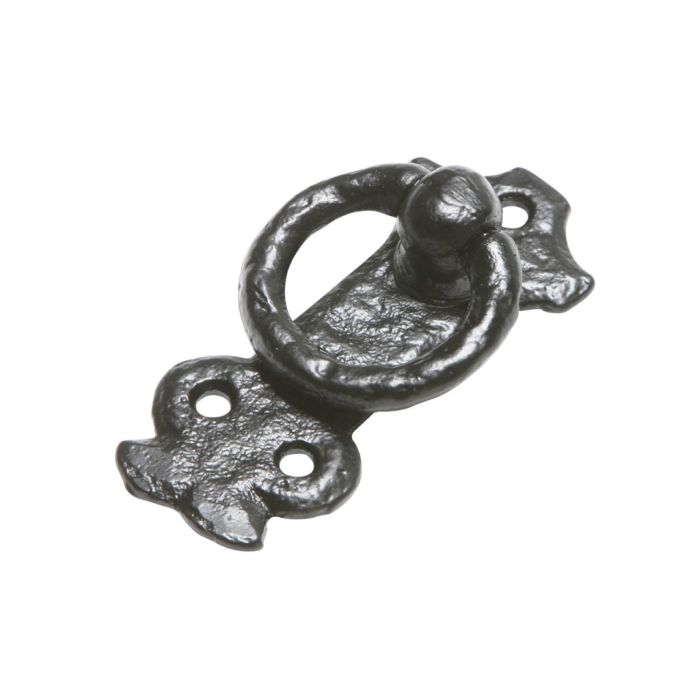
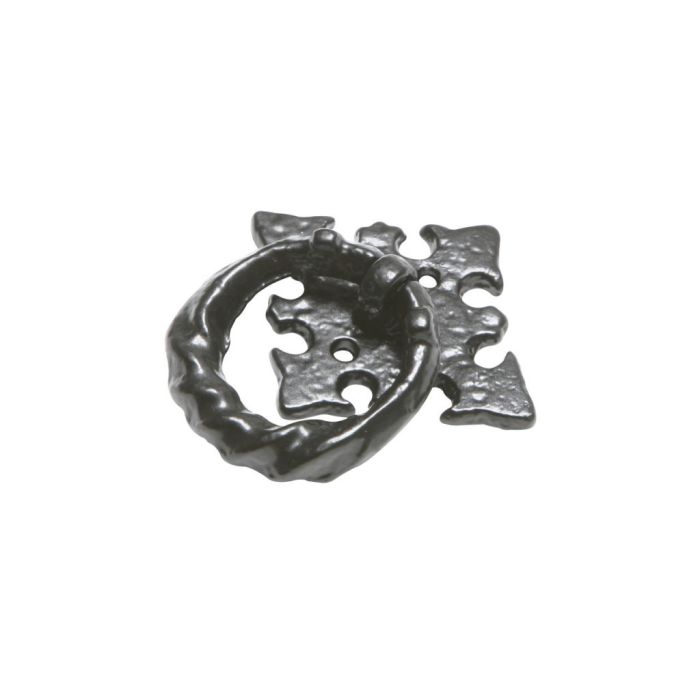
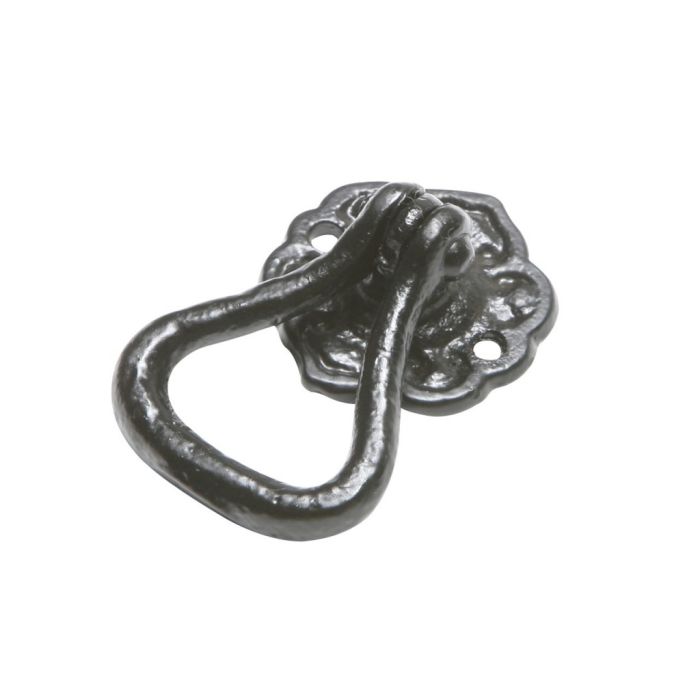
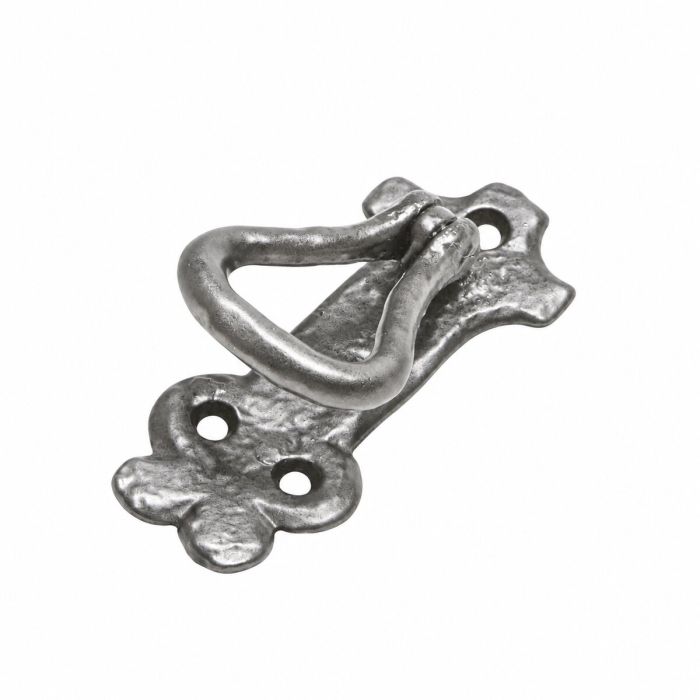
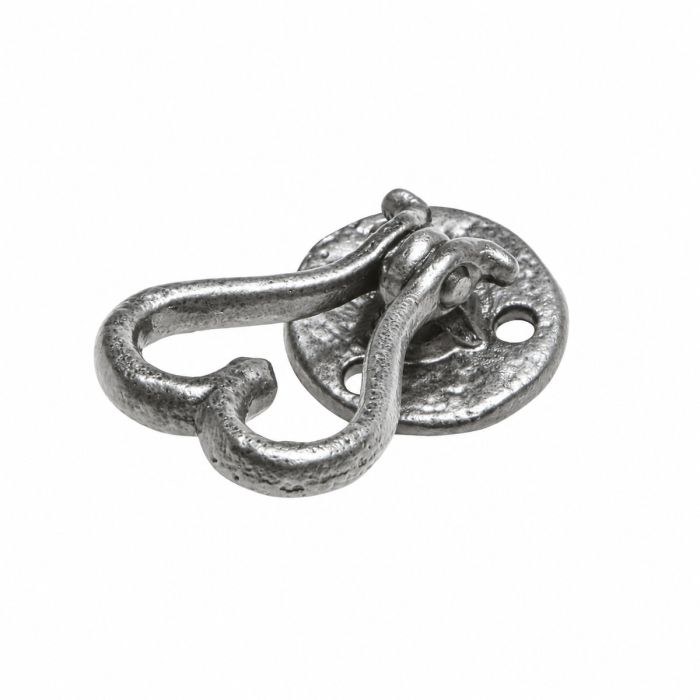
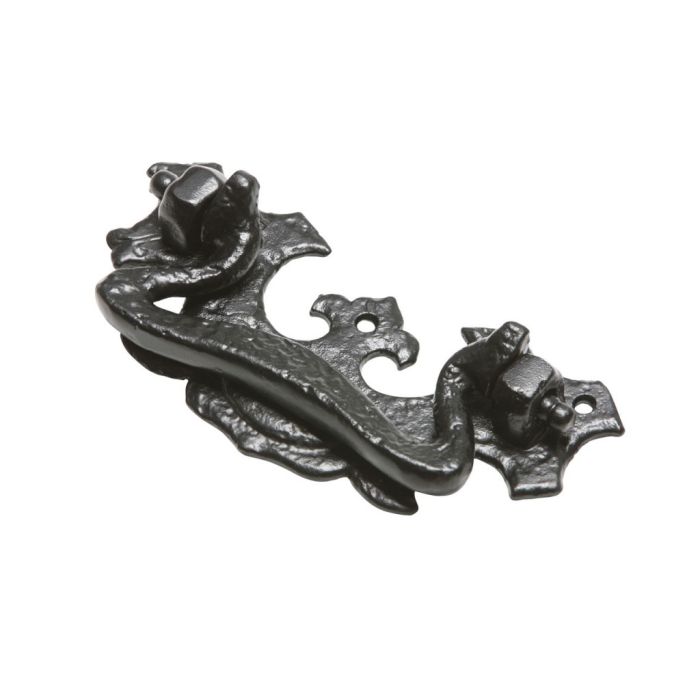
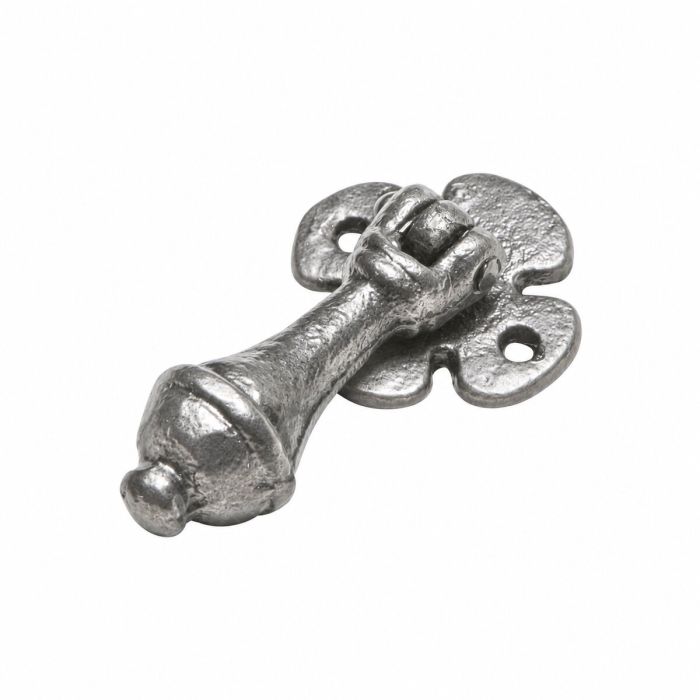
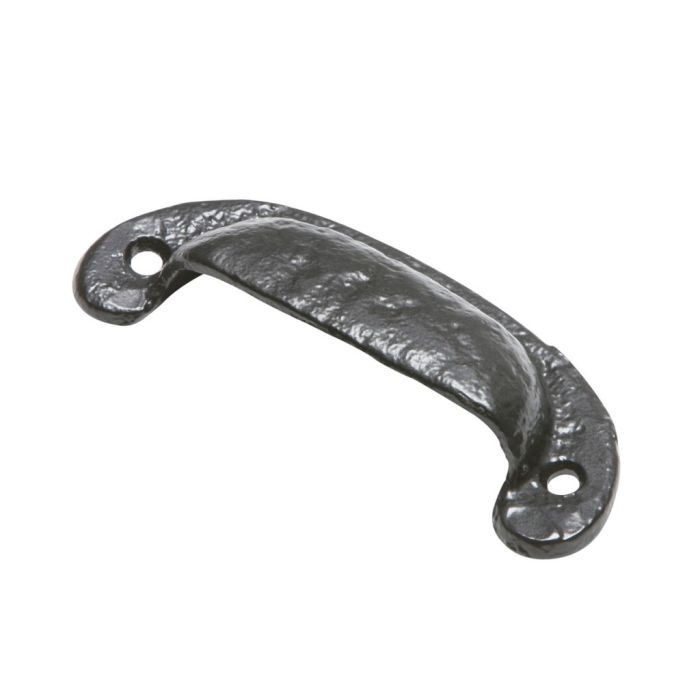
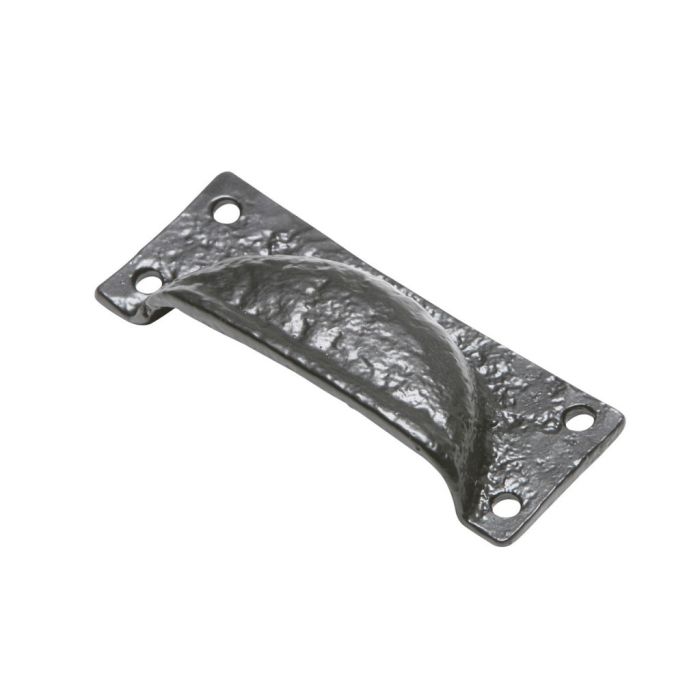


Choose the handle for the cabinetry
A well-chosen fitting should feel as though it belongs with the cupboard rather than simply having been added to it. Broad drawers can carry a more substantial pull, while narrow rails and lightly detailed doors often benefit from a quieter form.
Period labels can help describe a design language, but they do not establish age or provenance. A sympathetic result usually comes from proportion, observable pattern, verified material information and the relationship with the existing joinery.
Measure before removing an old fitting
Older furniture often records the fittings that have been attached to it before. Photograph the handle in position and record:
- fixing centres
- overall length and width
- projection and grip clearance
- footprint, old holes and recesses
- door or drawer-front thickness
Fixing centres are measured from the centre of one fixing hole to the centre of the other. Matching them may allow the existing holes to be reused, but a smaller replacement can still reveal faded paint, compression marks or earlier drilling.
Materials, finishes and natural change
Finish names describe appearance but do not necessarily identify the material beneath. Antique brass, bronze, black or pewter wording should not be treated as proof of solid metal, casting, forging or hand-finishing.
Where an exact product is documented as unlacquered brass and its manufacturer explains how the surface changes through handling and exposure, that behaviour can form part of the choice. Lacquered, plated and coated finishes may behave differently, so follow the care information for the individual product.
Coordinate without forcing an exact match
Compare the handles with nearby cupboard knobs, cup handles, hinges, catches and other visible ironmongery. The room does not need to use one identical fitting throughout; a related scale, material character or degree of ornament can be more convincing in an older interior.
Where a close finish match matters, products from the same manufacturer, collection or documented finish family provide a better starting point than a finish name alone.
When the old fitting is difficult to match
Unusual centres, lost fittings or delicate cabinetry deserve care before new holes or larger recesses are introduced. Send the PHG team clear photographs, measurements and details of the furniture so the available options can be narrowed first. For listed or conservation-sensitive work, confirm the project requirements with the relevant professional before altering established joinery.
Questions customers commonly ask
How do I measure replacement cupboard handles?
Measure between the centres of the fixing holes, then record the overall length, projection and footprint. Matching the centres alone does not guarantee that the new fitting will cover earlier marks.
Does antique brass mean solid brass?
Not necessarily. Antique brass may describe the visible finish rather than the base material. Check the exact product specification.
Should cupboard handles match the door and window furniture?
Not necessarily. A considered scheme may coordinate through scale, material character, finish family or degree of ornament without using identical fittings.
Can new cupboard handles be used in a listed property?
That depends on the building, the joinery and the scope of the work. Confirm the project requirements with the relevant professional before ordering or drilling established fabric.
What Our Customers Say
★★★★★
“Excellent service, great quick delivery and my handles are beautiful.”
Period House Group customer review